

- My role
- Senior Product Design Manager
FanDuel Casino - Initial tiger team
- 1 design leader · 2 designers
1 product manager · 3 engineers - Partners
- Product, Engineering, Product Marketing, Brand, Creative, and Sportsbook
01 / THE OPPORTUNITY
A reward should feel like a reward.
We were asked to tell customers what they earned after completing a promotion. Casino wasn’t yet using motion meaningfully inside the product. Research into mobile gaming suggested an opportunity to make reward delivery more understandable, celebratory, and distinctive.
I saw a capability beyond the initial feature. Motion could become part of how Casino communicated value.
One designer brought deep motion expertise and created the high-fidelity experience. I led the strategy, critique, stakeholder alignment, and broader product vision, working with Product Marketing, Brand, and Creative.
- Anticipation: a reward is ready.
- Interaction: the customer taps the box.
- Celebration: the reward emerges.
- Comprehension: reveal exactly what they earned.
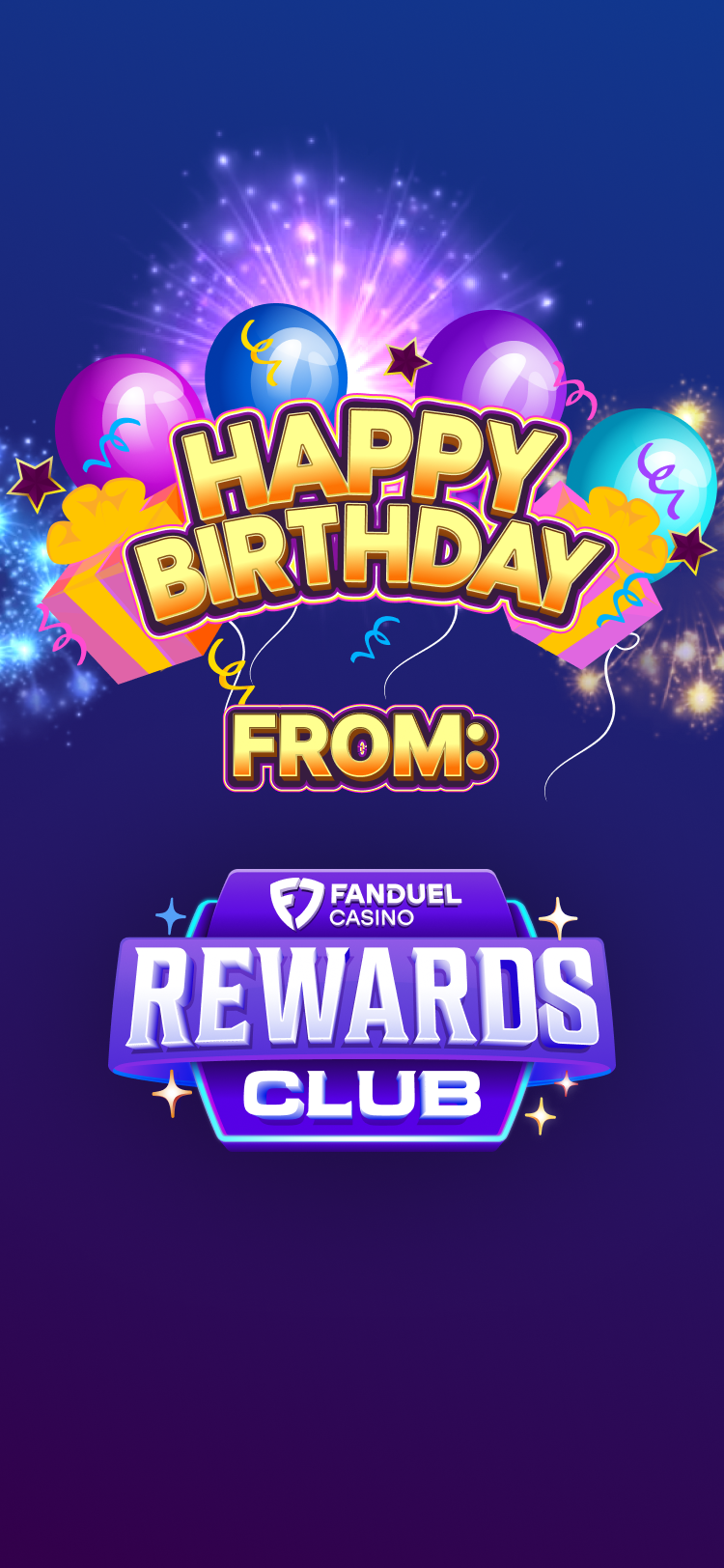
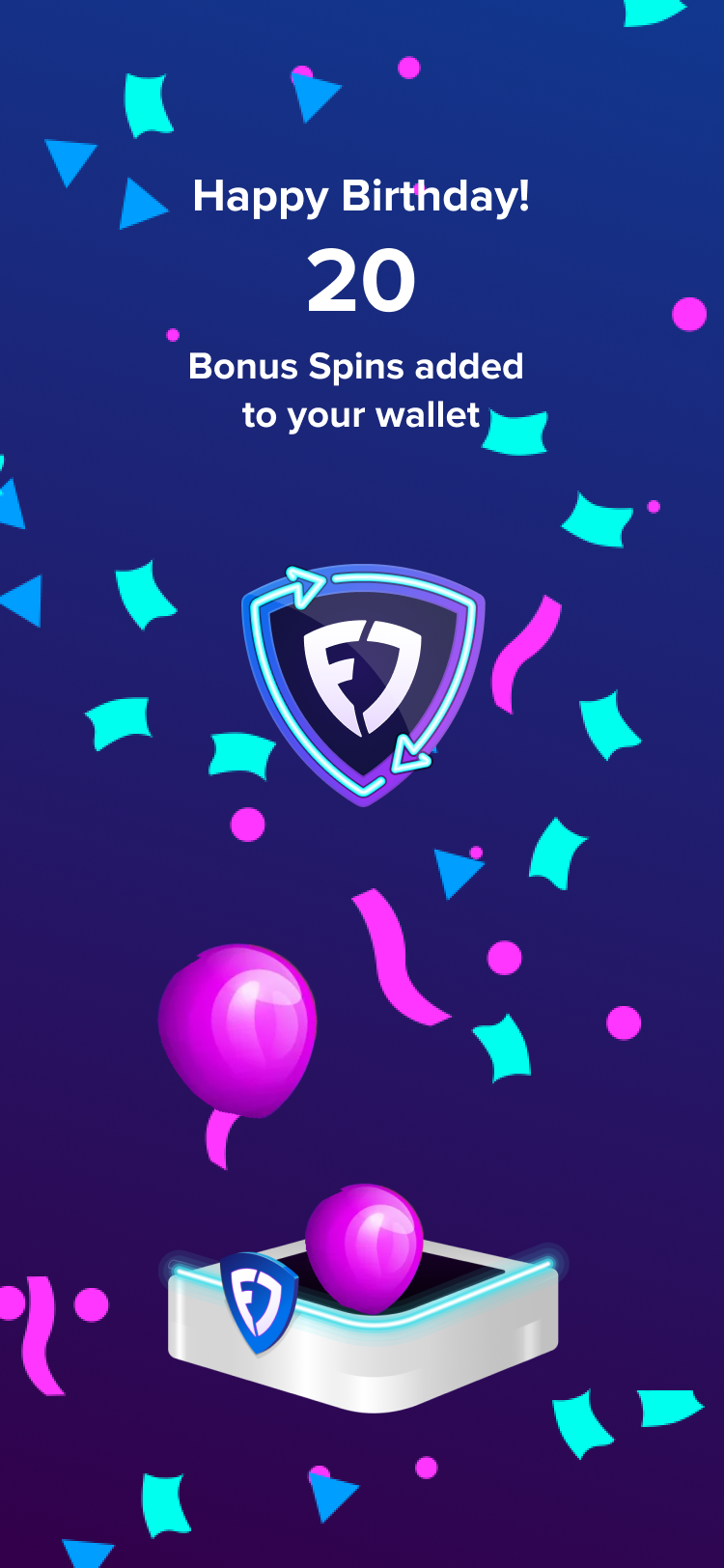
A birthday moment, from anticipation to reward.
Selected design states show the birthday box, the branded greeting, and the final reward amount. Celebration has a clear destination: knowing what was added to the wallet.

02 / THE TECHNICAL PATH
Protect the experience. Find a better way to build it.
The initial concepts created app-package-size concerns. Before reducing the ambition, I formed a tiger team across Design, Product, and Engineering to explore another path.
We moved forward with Lottie to meet launch commitments. I continued researching alternatives, found Rive, contacted the company, and arranged a demo. Its potential for smaller vector assets, interactive states, and reusable components opened a different conversation.
01 / Explored first
WebP
Solved part of the technical problem, but did not support the experience we wanted.
02 / The launch path
Lottie
Allowed us to launch while accepting visual and technical compromises.
03 / The capability path
Rive
Gave us a way to pursue quality, performance, and interactivity together.
03 / ORGANIZATIONAL ADOPTION
Casino couldn’t adopt it alone.
Casino and Sportsbook shared a platform. Introducing a new vendor affected both businesses, so technical feasibility was only part of the work.
I partnered with Product and Engineering to build the case. We demonstrated Reward Box, explained the technical model, and showed how the capability could support both organizations.
I worked directly with Rive on licensing and with Product leadership on funding. Our pilot team demonstrated the technology and the experiences it could enable. The SVP of Product approved the budget.
My role was to connect the experience vision, technical exploration, and organizational case—then help the team share what it had learned.
An animation prototype made the idea tangible. Cross-team support made it sustainable.
04 / REPEATABLE DELIVERY
From a bespoke experience to a repeatable system.
Once stakeholders saw Reward Box, demand grew. A bespoke engineering process would not scale, so we made the experience configurable through the CMS.
The work still required design, approvals, and engineering QA. The reusable foundation made new variants largely plug-and-play.
- 1.Design
- 2.Stakeholder approval
- 3.Motion
- 4.Approval
- 5.Engineering QA
- 6.CMS
- 7.Launch
- First Lottie Reward Box
- ~6 months
- Design to production for the initial experience.
- With Rive
- ~2–3 months
- Design to production at the next stage.
- With Rive + CMS
- 3–4 / month
- Approximate throughput of unique Reward Boxes.
- Unique Reward Boxes
- 20+
- By the end of my time at FanDuel, with more being added.
- Casino reward delivery
- ~95%
- Approximate share of reward-delivery experiences using Reward Box when customers received a reward.
The first two figures describe delivery time; the monthly figure describes throughput after the reusable foundation was in place.
One recognizable box. Different expressions.
Gift and birthday treatments keep the box shape and FanDuel shield recognizable while changing the color, ribbon, and occasion.




05 / CUSTOMER RECOGNITION
Customers learned the experience.
Customers began referring to Reward Box by name in qualitative studies and surveys. They understood that their rewards would arrive there.
Reward Box also appeared in our Perceived Generosity research, providing a qualitative signal about how customers understood and perceived their rewards. This supported the experience direction; it did not establish a measured commercial lift.
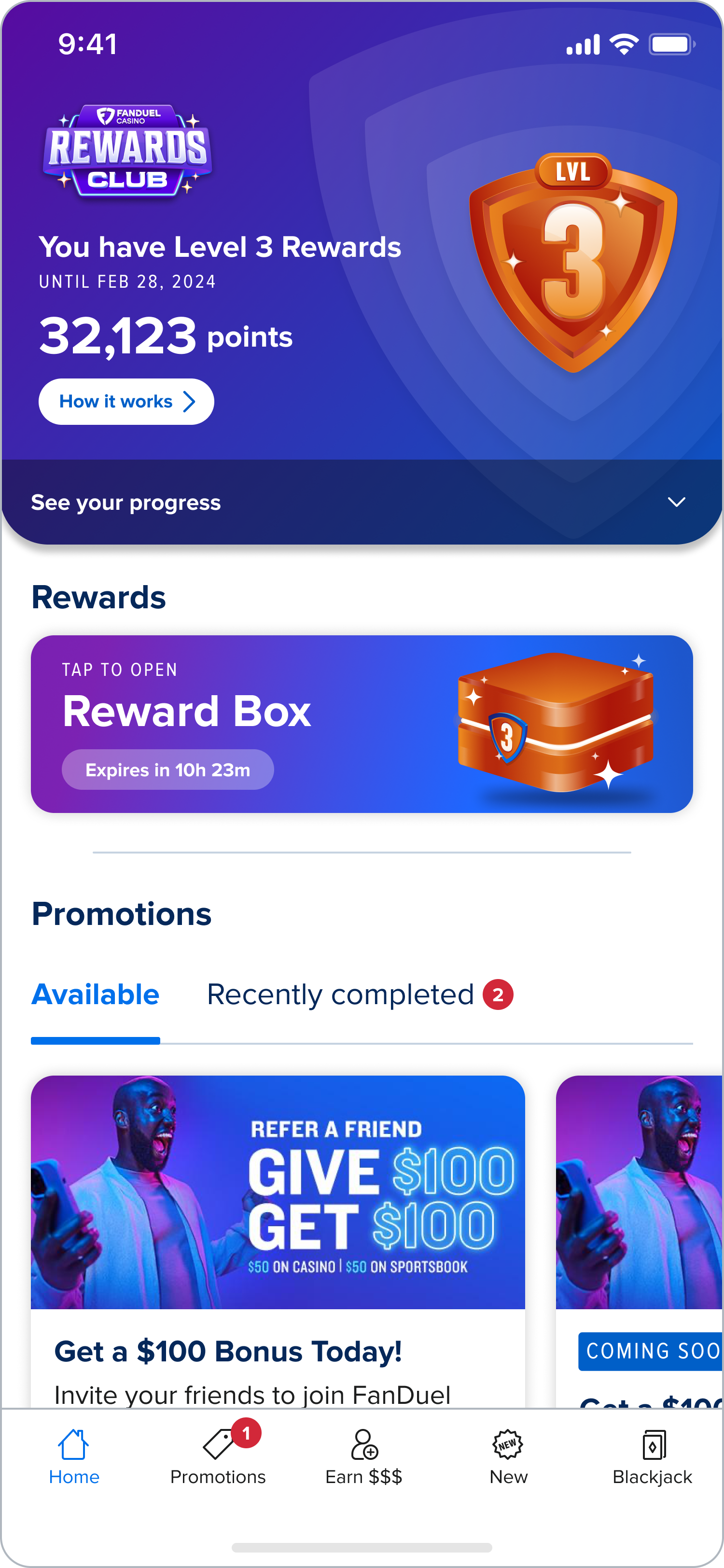
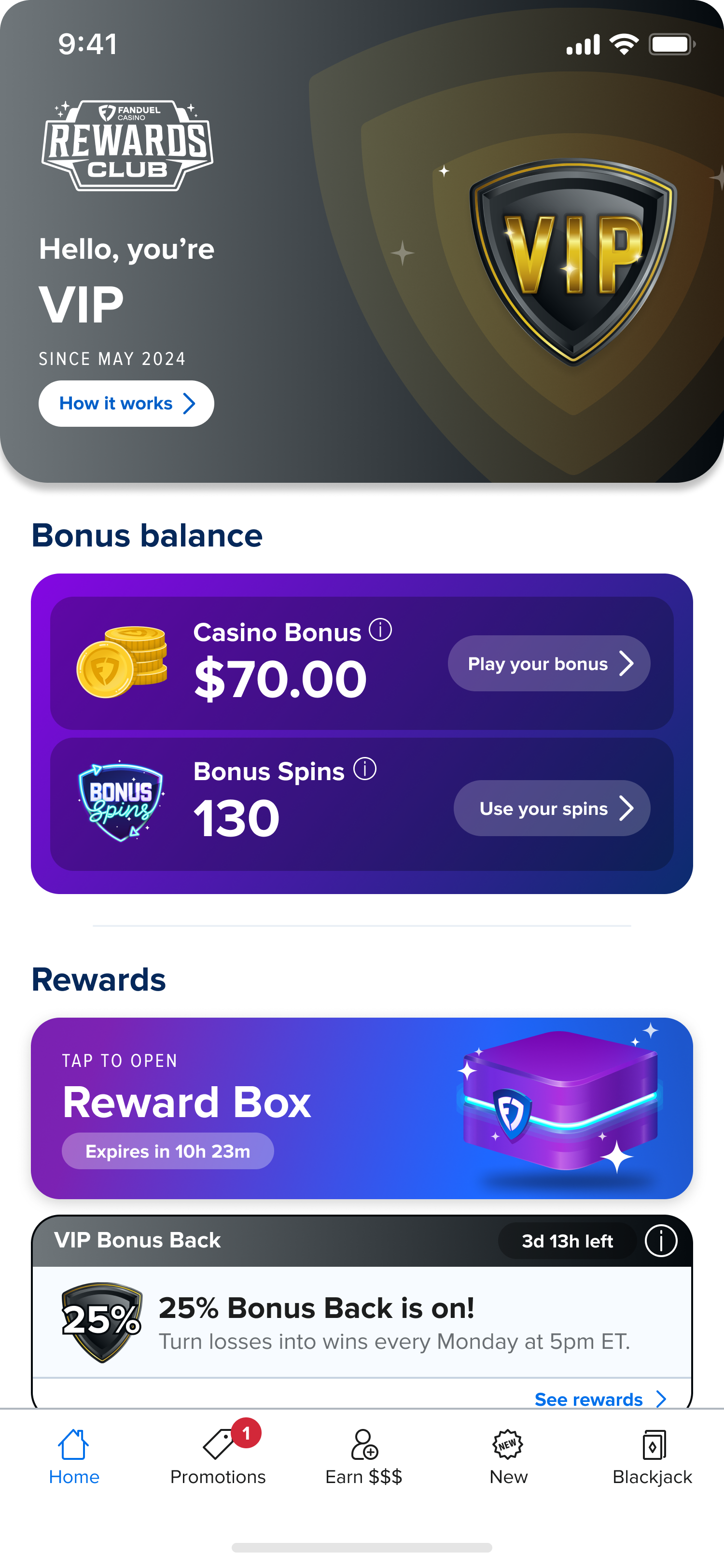
A recognizable place to collect rewards.
These Rewards Club screens place the named Reward Box alongside balances and benefits. The tap-to-open action and expiry time make the next step visible before the reveal begins.
06 / PEOPLE AND REACH
Grow the capability beyond its first expert.
More designers could create motion.
We started with one designer who had deep motion expertise. I gave the broader team access to Rive and encouraged them to learn.
Within approximately 3–4 months, three additional designers could create animated product experiences. Designers began considering where motion could improve their work.
Sportsbook adopted Rive too.
Approximately eight months before I left, Sportsbook began using Rive. Our Casino team taught its designers and engineers how we had implemented it and what we had learned.
The capability crossed the organizational boundary that had initially made adoption difficult.
07 / THE COUNTEREXAMPLE
Sometimes better motion means less motion.
Rewards Machine taught us where celebration became friction. Customers enjoyed the experience but said the animation took too long to reach the reward.
We identified where motion added value and accelerated everything else.
- Original Rewards Machine spin
- ~18 seconds
- Revised spin
- Under 11
- seconds
Motion should amplify the moment, not become the moment.
08 / THE NEXT HORIZON
From animated features to a motion language.
By the time I left, Reward Box delivery, broader designer capability, and Sportsbook adoption were established. A formal motion design system was the next ambition.
I wanted shared timing and interaction principles, reusable animated components, and more interactive states across Challenges, Reward Drops, loyalty, jackpots, and discovery. I was also planning a stronger creative capability within Product Design. These were future directions, not a completed system.
What started as one animated Reward Box became a new way for FanDuel to communicate value—and a capability more people could build with.