Executive summary
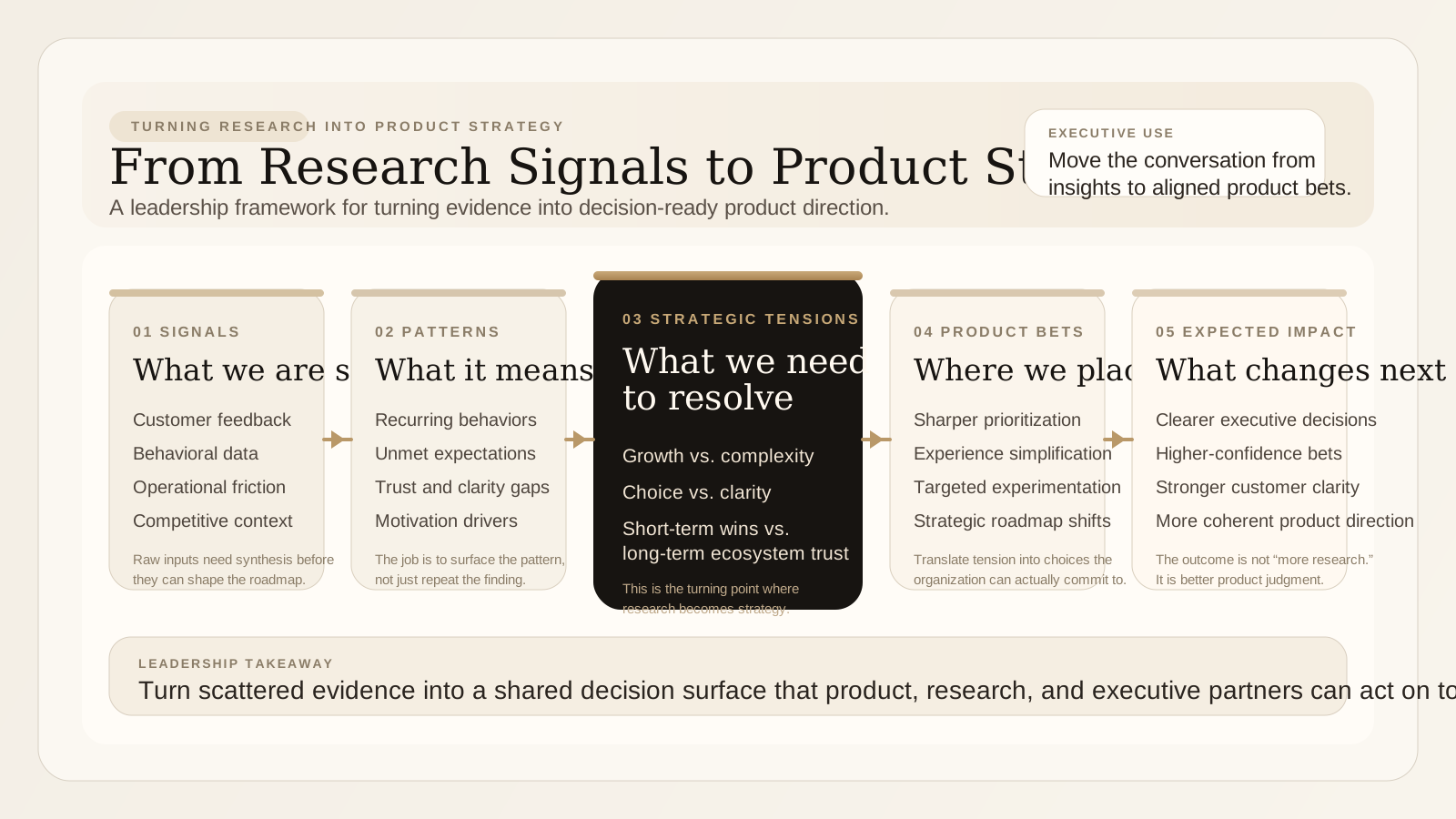
Research becomes influential when it changes what the organization decides to do next. This initiative focused on that translation layer: the leadership work required to turn evidence into product direction.
The gap
Many organizations invest in research and still struggle to use it well. The issue is not a lack of insights. It is the gap between evidence and action.
In this work, I focused on closing that gap by making research more legible to product and executive stakeholders.
How I approached it
Rather than producing a long list of findings, I built a structure that translated research into product implications, opportunity spaces, and decision-ready narratives.
Collect
Aggregate signals across methods and touchpoints
Brought together behavioral data, qualitative feedback, and operational context to understand where friction and opportunity were clustering.
Synthesize
Turn findings into patterns and tensions
Focused on the underlying strategic questions instead of isolated observations or one-off usability issues.
Translate
Connect evidence to product direction
Presented the work in a form that could influence prioritization, alignment, and roadmap conversations.
Decision framework
Decision
Why it mattered
Outcome
Organize research around decisions, not methods
Stakeholders needed clarity on what action the evidence supported.
Research became easier to discuss in product planning and executive settings.
Highlight tensions, not just truths
The most valuable insights often reveal tradeoffs rather than simple answers.
Teams were better able to make strategic choices with eyes open.
Pair evidence with opportunity framing
Insight without direction rarely changes the roadmap.
Design gained stronger influence in upstream product strategy.
Why it mattered
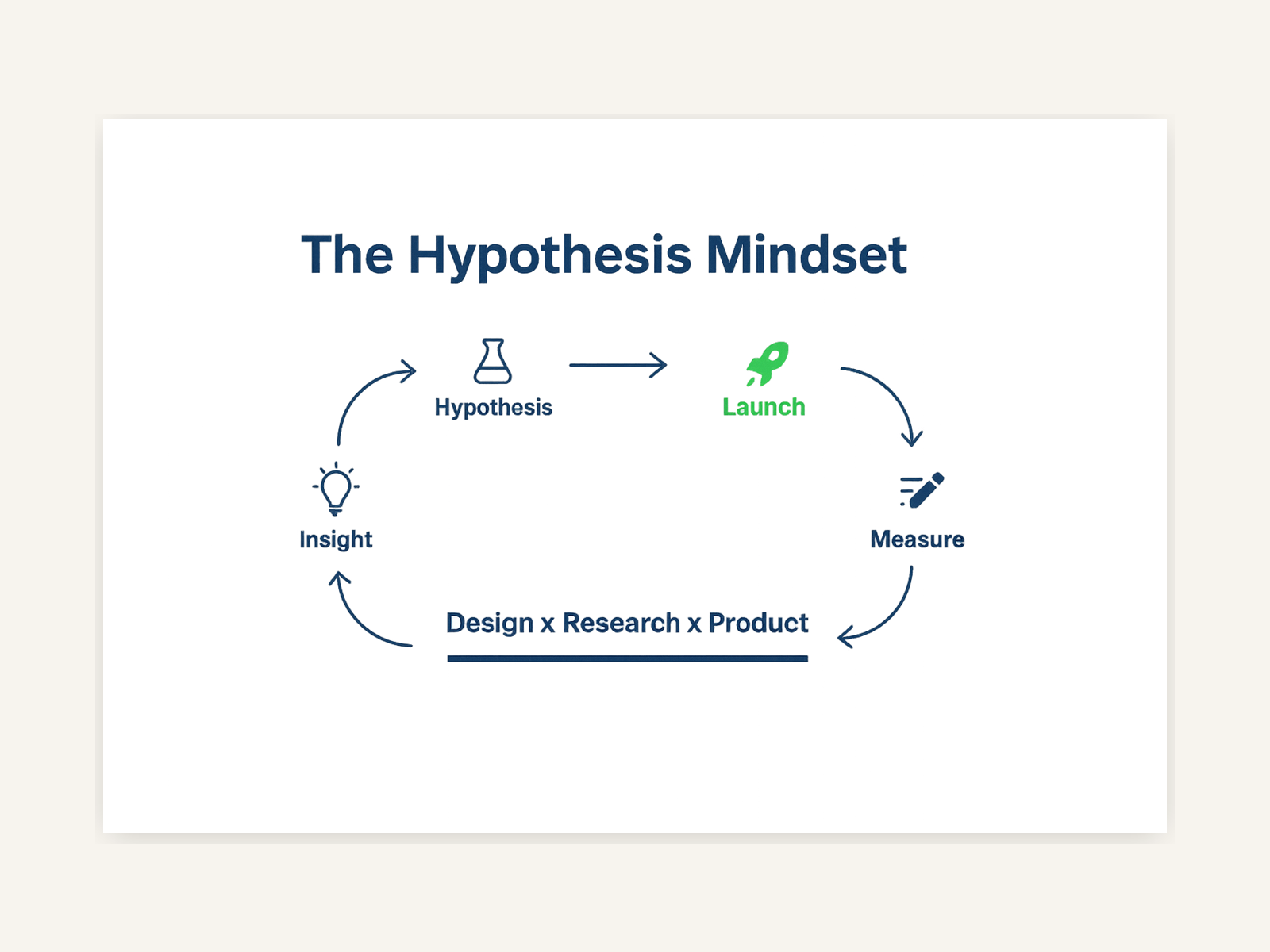
This work helped reposition research as a strategic leadership tool. It improved the team’s ability to make product decisions with more confidence and helped design show up as a stronger voice in defining what should happen next.