We didn’t simply personalize which promotion a customer saw. We explored personalizing the promotion itself.
A customer’s game preferences, reward use, and promotional engagement could inform the legs of a ladder, its offers, and its rewards. The opportunity was to make loyalty feel more relevant while giving the business a deliberate way to introduce new games and behaviors.
The leadership decision
Invest in a configurable promotion framework.
The investment question was whether personalization could shape what a customer was invited to do and earn, rather than only decide which existing offer to display.
The direction we explored
Use behavioral preferences to generate recommended ladder legs, associated offers, and rewards. Connect that configuration to a frontend experience that explains tasks, progress, and completion.
This made the design problem broader than a recommendation card. The journey had to make a generated promotion understandable and usable.
The business lever we planned
Marketing would have an intervention point to add one or two games or behaviors that the business considered useful engagement or discovery opportunities.
The intended balance was relevance grounded in customer preferences, with a bounded place for business-defined discovery.
Opportunity & product vision
Make a promotion feel relevant from the first task to the final reward.
The proof of concept considered signals including games played, rewards used, and promotions a customer typically engaged with. Instead of treating every customer’s journey as identical, the concept used those signals to recommend the composition of a ladder.
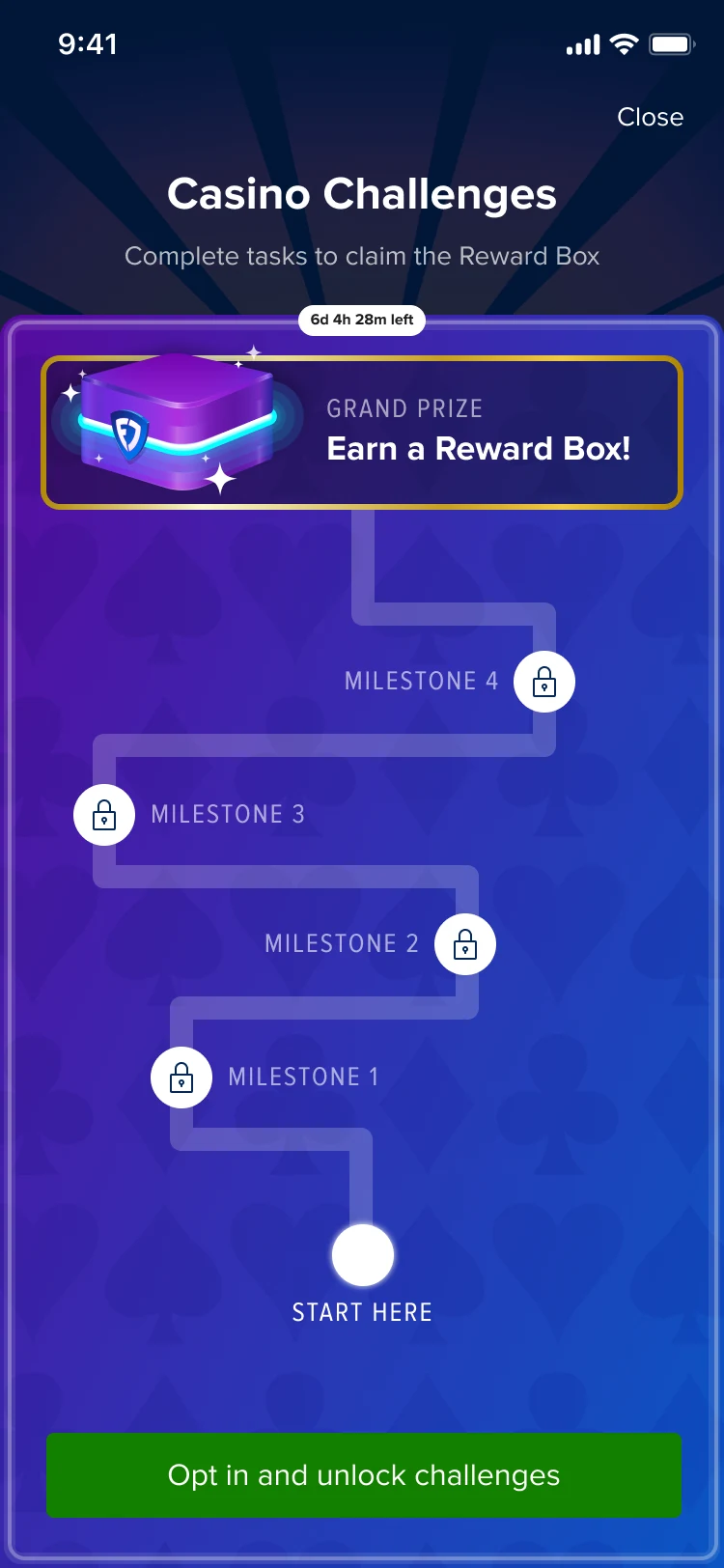
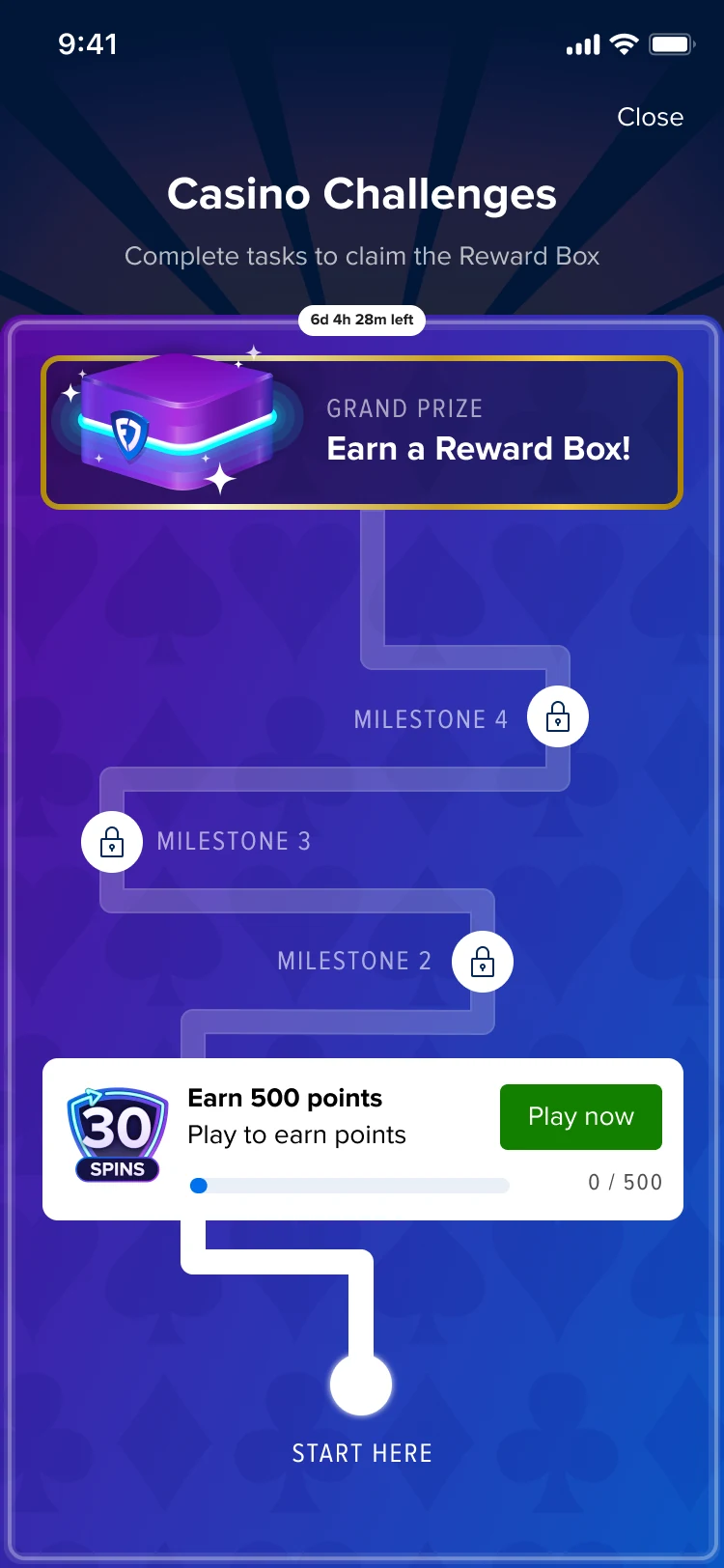
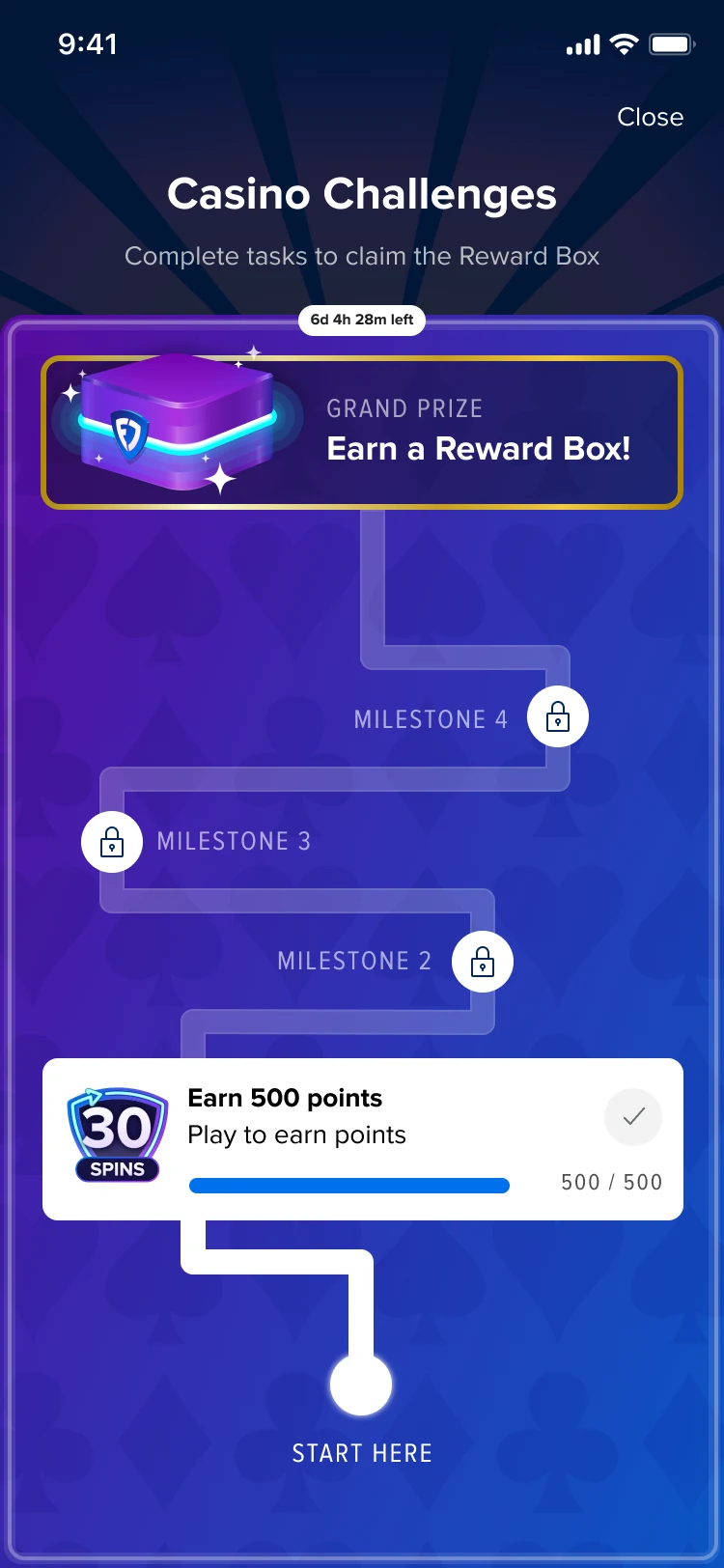
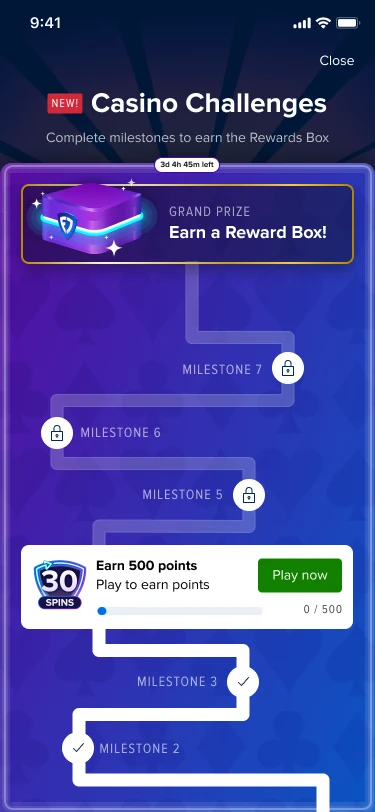
The design connected individual tasks to milestones, progress indicators, rewards, and a larger completion prize. It also considered daily, weekly, and monthly journeys. A reusable framework connected those different durations.
The strategic challenge was to connect customer relevance with business discovery without making the experience difficult to understand. My contribution was to translate that opportunity into the customer journey while working with Product and Engineering on feasibility.
How the concept connects
From behavior to an understandable ladder.
Reconstructed explanation of the proof of concept, based on my account. The map explains the experience and responsibilities. Original algorithm specifications are unavailable.
01 · Inputs
Player behavioral data
Games played, rewards used, promotion engagement, and relevant behavioral preferences inform the opportunity.
02 · Recommendation
Personalization engine
The concept generates recommended ladder legs, associated promotional offers, and rewards.
03 · Planned human input
Marketing intervention
Marketing can introduce one or two business-defined games or behaviors for engagement or discovery.
04 · Configuration
Ladder configuration
The resulting promotion configuration informs the tasks, milestones, rewards, and cadence presented to the customer.
05 · Customer experience
Frontend experience
The frontend assembles the ladder and communicates participation, progress, locked states, and completion.
06 · Proposed evaluation
Measurement
A future test would evaluate participation, reward use, tier movement, comprehension, and promotional cost against a comparison experience.
Human oversight
Give the business a clear intervention point.
Historical plan
Combine preferences with discovery.
The Marketing intervention was intended to complement the personalized recommendation with one or two deliberate business opportunities. It connected campaign intent to the generated customer journey.
Proposed next gate
Validate the boundaries before release.
Before a customer test, I would align Product, Engineering, Marketing, Research, and the relevant risk partners on eligibility, promotional terms, privacy, responsible gambling constraints, review responsibilities, and how an unsuitable configuration is handled.
These safeguards remain proposed requirements for a future customer test.
Original product artifacts
The ladder had a visual language.
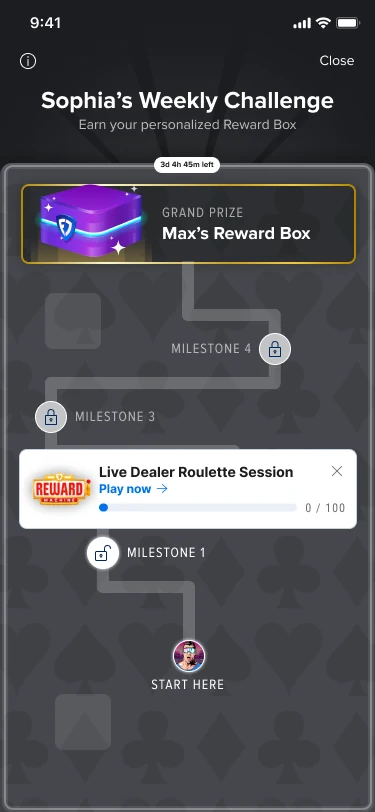
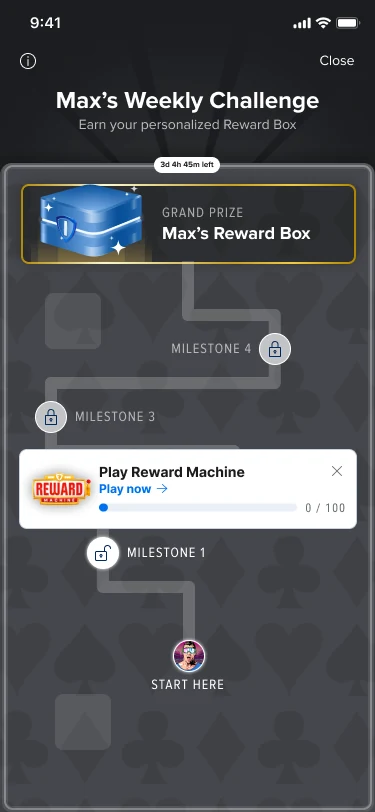
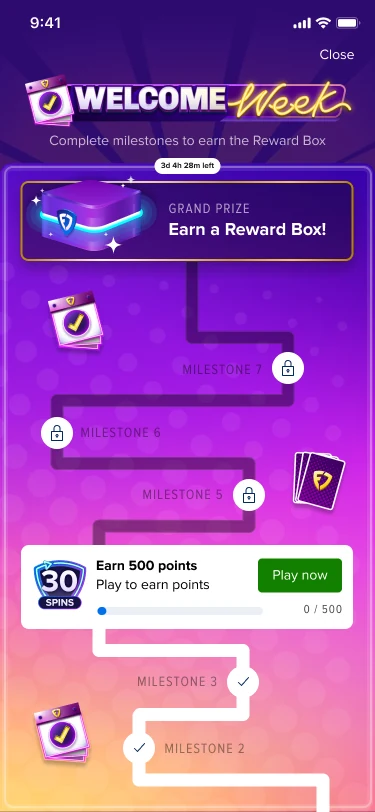
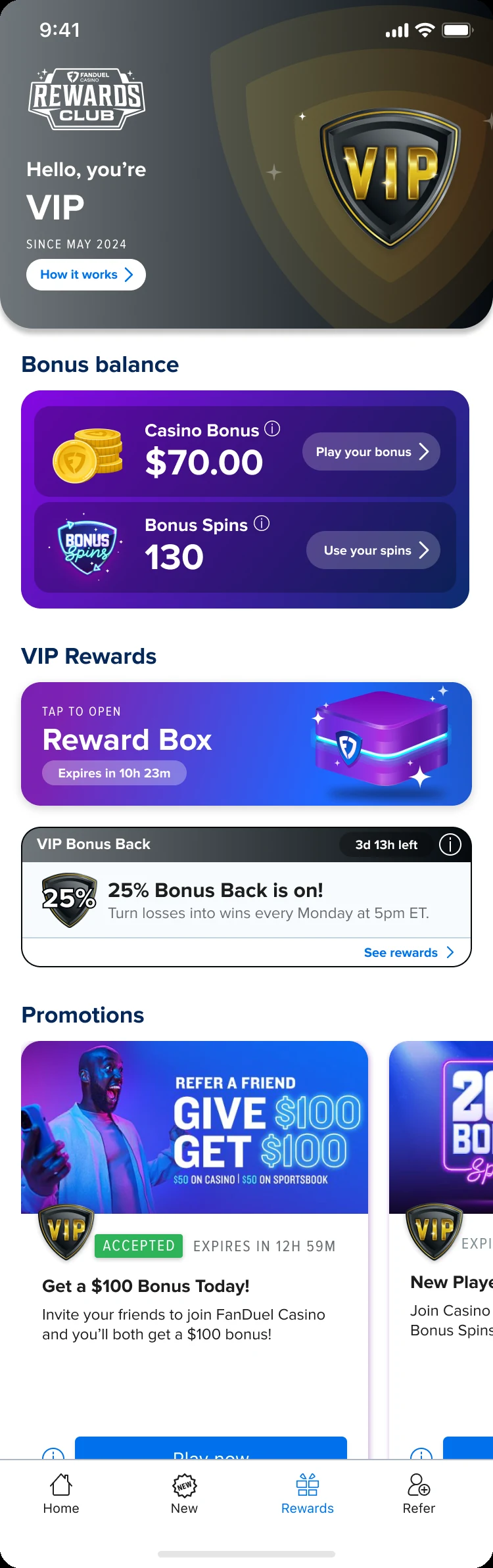
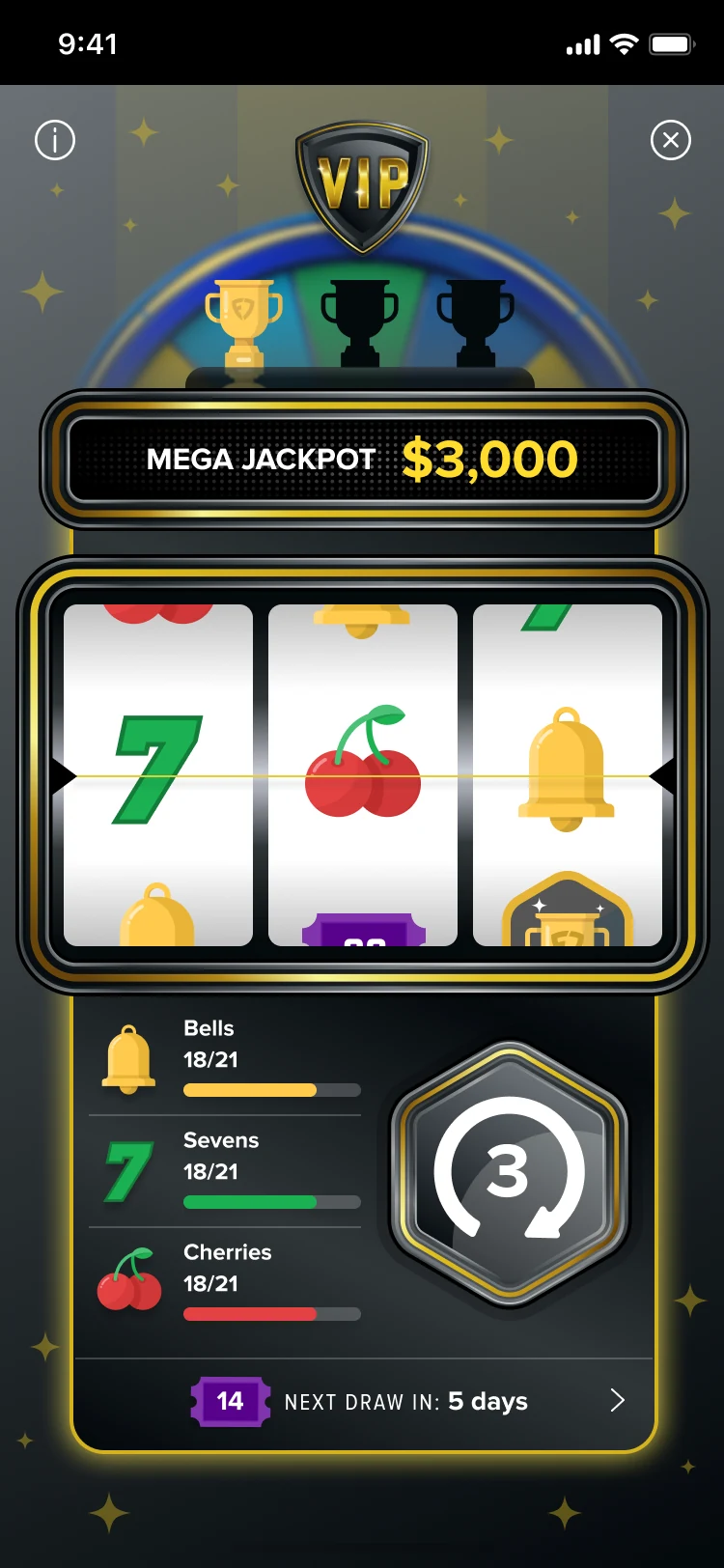
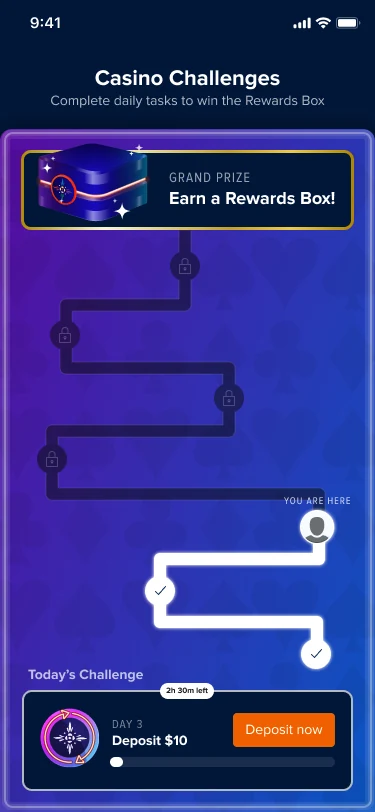
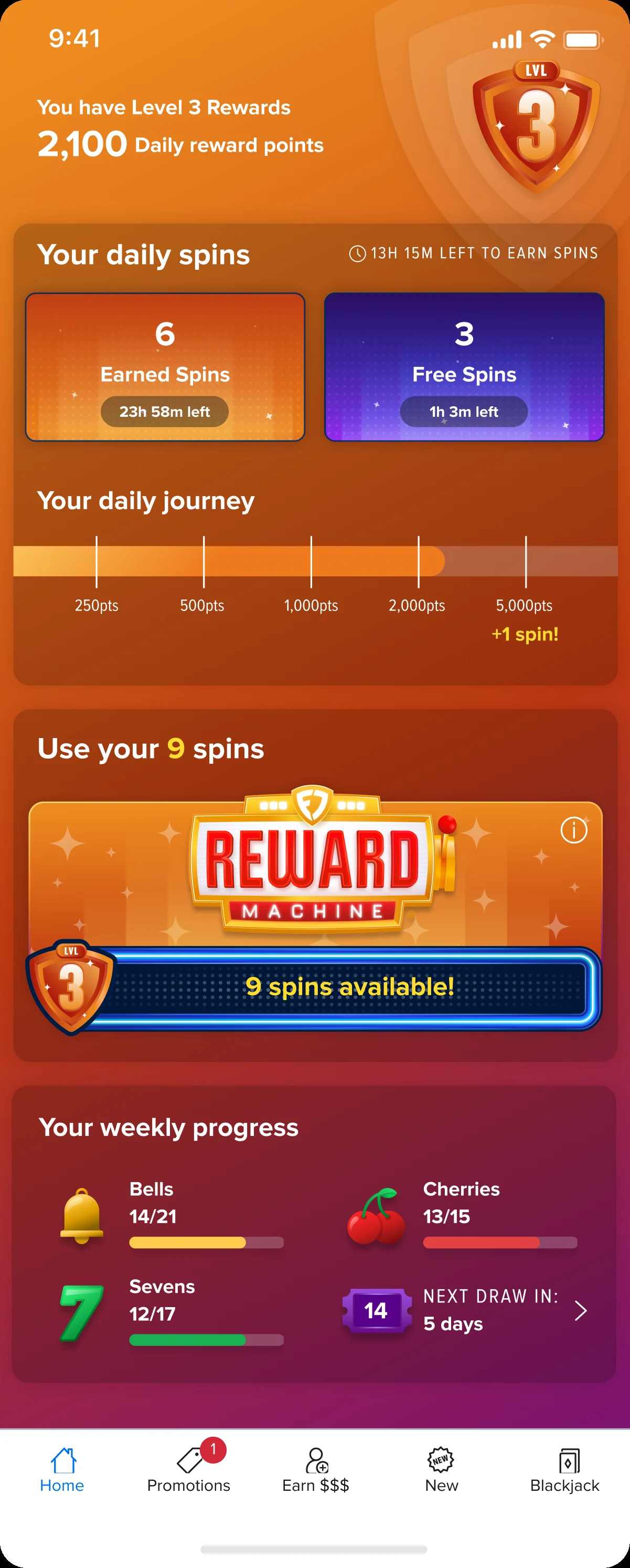
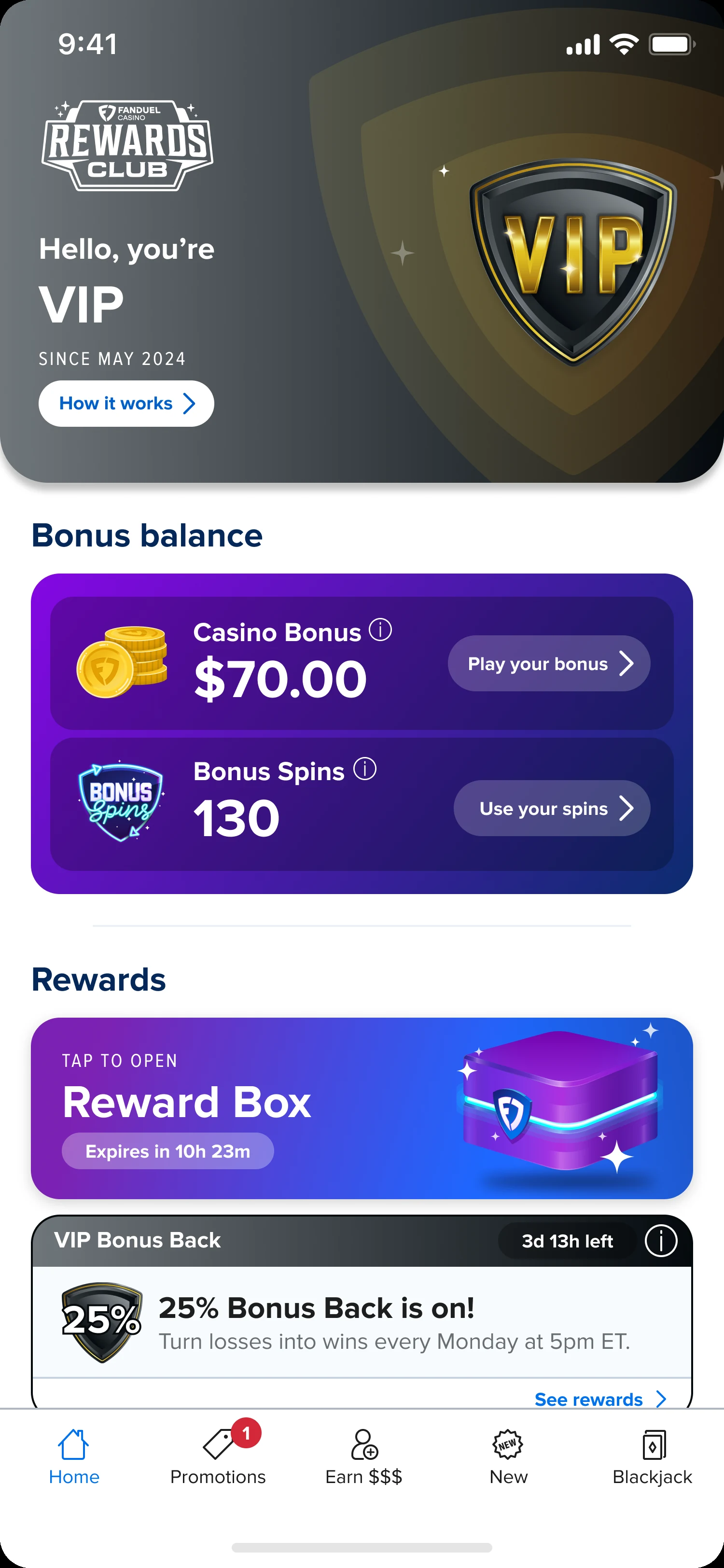
These original FanDuel design screens show opt-in, progression, personalized variants, and promotional themes. They establish the visual work explored. They do not establish that each screen was dynamically generated by the POC.
Source details matter. The “Milestone 1 Complete” filename shows partial progress. Sophia’s original screen retains a “Max’s Reward Box” label. Originals are preserved as supplied.
Reconstructed demonstration
Two customers. Different promotions. One experience framework.
Sophia and Max are fictional customers used to make the concept tangible. Their casino preferences, offers, rewards, and journey states are illustrative. The demonstration shows how a configurable experience could behave; it is not connected to customer data or a live personalization service.
Compare the profiles and daily, weekly, and monthly journeys, then follow the opt-in, task, milestone, and completion states. The internal Marketing view illustrates the planned intervention point. All demo interactions use local, fictional data.
Illustrative customer journey artwork · fictional profiles. Preferences in the demo are newly constructed examples.
Interactive reconstruction / Marketing and customer experience
Build the promotion around the player.
Inspect a fictional recommendation, add up to two discovery actions, then review the journey as a customer. This is a conceptual reconstruction of the proposed Marketing intervention workflow.
Sophia and Max are fictional. The rules and interface here explain the product idea. Every activity, reward, timer, and policy check is illustrative. Fictional milestone and offer labels explain the concept. Completion simulates a local state transition. Original offer rules are unavailable.
Marketing review workspaceDraft configuration
1 / Inspect the inputs
What the fictional profile tells us.
2 / Review the generated legs
A preference led starting point.
Illustrative rules match stated interests to activities, promotional formats, and reward associations.
3 / Add the business perspective
Introduce a discovery opportunity.
0 of 2 discovery actions selected.
4 / Review coherence and illustrative checks
Decide whether to show this journey.
This local action changes only the demonstration. A production review would require approved policy, privacy, promotional, and responsible gaming controls.
Inspect the illustrative frontend configuration
Reconstructed customer experience
9:41Demo preview
CASINO CHALLENGES
Sophia’s weekly challenge
A journey shaped around a fictional profile.
◷Weekly window · illustrative
Completion prizeA final Reward Box
Review and apply a configuration in the Marketing workspace to begin.
0 milestones complete0 / 4
Fictional rewards · local demonstration
✦
Journey complete
Every illustrative milestone is complete. The final Reward Box is ready to inspect.
The reconstruction adapts the supplied ladder patterns, with the first milestone at the bottom and the completion prize above. This interface illustrates a configuration driven experience and does not establish how the original POC was implemented.
Designing for scale
Make the framework reusable while the promotion changes.
The concept separated the configurable promotion from the experience needed to understand it. Daily, weekly, and monthly journeys could share recognizable task, progress, reward, and completion patterns while their content changed.
Customer clarity
Make the next action, reward conditions, and progress visible. A personalized offer still needs to explain what the customer is choosing to do.
Operational clarity
Make the relationship between recommendation, Marketing intervention, and the resulting ladder explicit. The reconstructed demo visualizes that relationship; it does not claim a production configuration system.
Reconstruction review
Keep the original beside the interaction.
Original FanDuel design · 375 × 812 logical proportions.
What the reconstruction preserves
Navy rays, a purple-to-blue challenge surface, a gold prize border, Reward Box artwork, milestone nodes, and green opt-in controls connect the demo to the original.
What is adapted
The demo uses expanded readable task cards and an expanded, bottom-to-top progression. Its illustrative activities, review controls, policy checks, timing labels, and completion logic explain the concept. They are newly reconstructed behaviors.
Original Figma specifications and the historical engine implementation are unavailable. Exact typography, exact path geometry, and reward animation remain fidelity differences.
No production baseline, experiment results, promotional costs, or measured retention and revenue outcomes are established for this proof of concept. These four hypotheses describe what a future evaluation would need to test.
Hypothesis 01
Participation
Definition: unique eligible customers who participate ÷ unique eligible customers in the assigned cohort, using the same eligibility rules and observation window for both groups.
Customer value: an invitation that feels relevant and understandable. Business hypothesis: more eligible customers choose to participate.
Validation: predefine the participation event and measure the assigned eligible cohort, including customers who never open the promotion. Compare with the existing experience.
Hypothesis 02
Reward utilization
Definition: eligible awarded rewards used within their redemption window ÷ eligible awarded rewards with a complete redemption window.
Customer value: rewards customers can understand and use. Business hypothesis: a more relevant reward mix improves meaningful utilization.
Validation: match reward maturity and redemption windows across groups. Report by reward type and track promotional cost. Do not mix awards still awaiting a full redemption window into the denominator.
Hypothesis 03
Tier advancement
Definition: customers in a prior-month eligible starting-tier cohort who advance by the end of the observation period ÷ all customers in that same starting-tier cohort.
Customer value: a clear path to benefits they value. Business hypothesis: relevant journeys support progression.
Validation: compare equivalent starting tiers and eligibility rules against a holdout, with a predefined observation period and responsible gambling guardrails.
Hypothesis 04
Tier maintenance
Definition: customers in a prior-month eligible starting-tier cohort who end the observation period at that same tier ÷ all customers in that same starting-tier cohort.
Customer value: understandable requirements for retaining benefits. Business hypothesis: relevant journeys help customers maintain their tier.
Validation: report maintenance separately from advancement and tier decline, using the same cohort and period. Do not combine maintenance and advancement into a single success rate.
A future test would also check for unintended incentives, including unsuitable frequency or persistence in pursuit of a milestone. Any benefit would need to be evaluated alongside incremental promotional cost, exclusions, customer comprehension, and responsible gambling measures. These are proposed evaluation requirements.
Proposed test: compare with the existing promotion experience using a predefined holdout, observation windows, and thresholds for a meaningful change. Read behavioral measures alongside customer comprehension, eligibility, privacy, responsible gambling measures, and incremental promotional cost. Revenue lift and ROI require separate causal evidence and complete cost inputs.
Leadership contribution & next investment decision
Turn the opportunity into a decision the business can test.
Frame the product opportunity.
The proof of concept explored generating the promotion itself: tasks, offers, and rewards informed by behavioral preferences.
Connect disciplines around the experience.
As Senior Product Design Manager, I worked with the Directors of Product and Engineering on opportunity, feasibility, and the customer journey. The planned Marketing input gave business discovery an explicit place in that journey.
Make the next decision evidence-led.
My proposed next investment gate would require evidence that customers understand the generated promotion, that the configured states behave reliably, and that a controlled test can evaluate benefit alongside cost and guardrails.
Outcome & reflection
A proof of concept, with a clear path to validation.
The work explored how recommendation intelligence, business intent, and frontend configuration could come together in one loyalty journey. The available account supports that exploration and the customer experience direction, not a shipped product or measured business return.
The lesson is that personalization becomes a product-design problem when it changes the offer itself. Relevance has to survive the whole journey, from the activity and reward to progress and human intervention.
For the foundational rewards visibility and loyalty work, see Generosity.